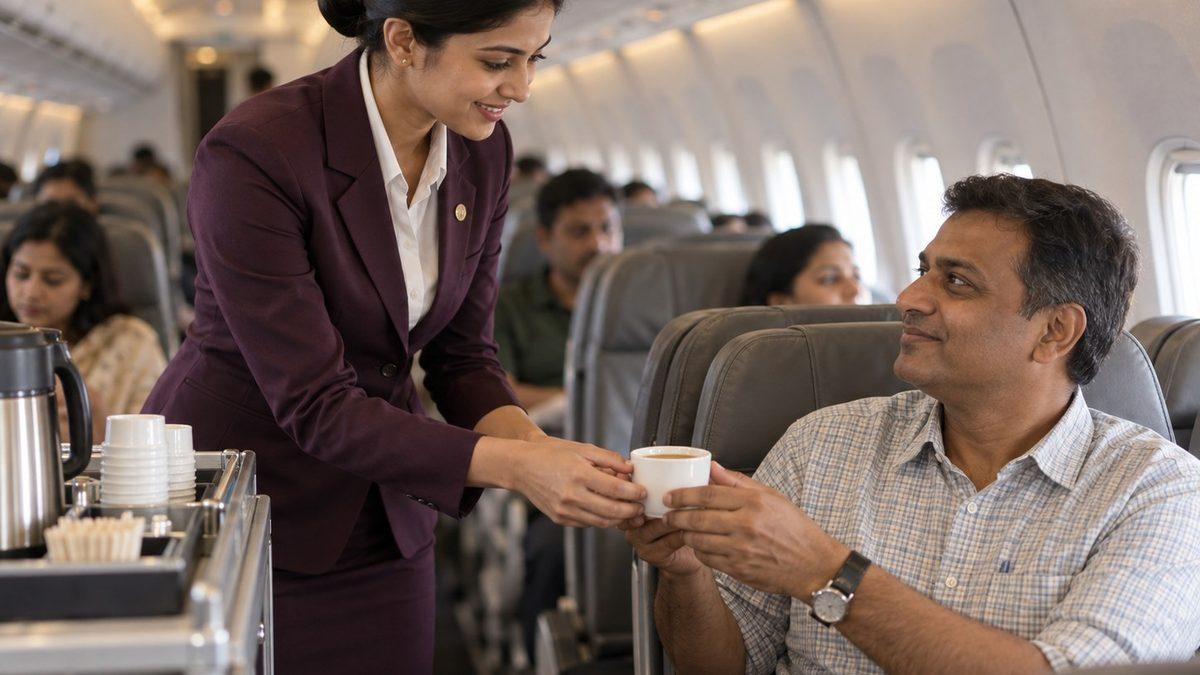
Search for a course and you will see four words used almost interchangeably: air hostess, flight attendant, stewardess and cabin crew. Students and parents often ask whether these are different careers with different training. They are not. This guide explains where each title comes from, what the job actually involves, how training works before and after an airline selects you, and what to look for in a course in Mumbai.
Four names, one job
Every title below describes the people who look after passengers' safety and comfort on board. The difference is only in who uses the word:
- Cabin crew: the official term used by airlines and the aviation regulator, and the title you will see in job notices. It covers men and women and every level, from new crew to the senior crew member in charge of the cabin.
- Air hostess: the most common word in India for a woman working as cabin crew. Many course names and searches still use it.
- Flight attendant: the international, gender-neutral word, used by many foreign airlines and in North America.
- Stewardess and steward: older words for female and male cabin crew. You still hear "flight steward" for men in India, but airlines rarely use these titles in job notices today.
What the job really involves
Serving meals is the visible part, but cabin crew are on board for safety first. Before every flight the crew checks emergency equipment, briefs on the route and any passengers who need help, and secures the cabin. In flight they handle service, but also medical situations, unruly passengers and, in the rare case it is needed, an evacuation. That is why airline selection tests how calm and clear you are under pressure, not only how you look and speak.
- Before boarding: safety equipment checks, crew briefing, cabin preparation.
- Boarding: greeting passengers, seating, cabin baggage, special assistance.
- In flight: safety demonstration, service, passenger care, first aid when needed.
- On landing: securing the cabin, disembarkation, reports on any incidents.
How cabin crew training works in India
There are two stages, and it helps to know which one a course covers.
Before selection: an academy course
An academy course prepares you to get through airline selection: grooming to airline standards, spoken English, service and passenger handling, group discussions and interviews. A good course also introduces safety and emergency basics so the airline's training is not your first contact with them.
After selection: the airline's own training
Once an airline selects you, it puts you through its own initial training program, approved by the DGCA, India's aviation regulator. This covers safety and emergency procedures, first aid, and the specific aircraft you will fly on, followed by assessments and supervised flights. You fly as crew only after passing it. No academy course replaces this stage, so be wary of any institute that suggests it does.
What airlines look for at selection
Requirements differ by airline, so always read the recruitment notice for the exact age, height and education rules. Most Indian airlines ask for Class 12 from any stream, clear spoken English and Hindi, a professional appearance, good health and fitness, and an Indian passport. The selection itself usually runs in rounds: a grooming and document check, a group discussion, and one or more interviews, followed by a medical check and background verification.
Most candidates who are turned down are not rejected for missing a rule. They are rejected for nerves in the group discussion, scripted interview answers or grooming that falls short on the day. Those are exactly the things that improve with practice.
Choosing a course in Mumbai
Whatever a course calls itself, check what it actually trains. Ask how much time goes to practical work in a mock cabin, whether interviews are recorded and reviewed, how grooming is assessed, and what support you get when airlines announce recruitment drives.
Centuria's AHTM course is our cabin crew program, with mock cabin drills, grooming checks and recorded mock interviews. It runs for six months, two hours a day, three days a week, at our Vashi, Powai and Andheri campuses. If you would rather work at the airport than on board, see how the courses compare.
Keep reading
Students join us from
Frequently asked questions
Is an air hostess the same as a flight attendant?
Yes. Air hostess, flight attendant, stewardess and cabin crew all describe the same job. Airlines use "cabin crew" in job notices, and it covers both men and women.
Can men become cabin crew in India?
Yes. Indian airlines recruit male cabin crew, sometimes called flight stewards, through the same selection process as women.
Does an academy course make me a certified cabin crew member?
No. The airline that selects you gives you its own DGCA-approved initial training, and you fly only after passing it. An academy course prepares you to be selected and gives you a head start on that training.
Which course should I choose to become a flight attendant?
Choose a course built around cabin crew selection: grooming, spoken English, service practice in a mock cabin and interview preparation. At Centuria, that is the six-month AHTM course.
Train for cabin crew selection
Centuria's AHTM course prepares you for airline selection with mock cabin drills, grooming checks and recorded interview practice.